How to Evaluate a Covington KY Investment Property
April 2, 2026
April 2, 2026
If you are thinking about buying an investment property in Covington, KY, it can be tempting to focus on price alone. But in this market, a good deal is not just about what you pay up front. You also need to understand building age, local rules, recurring costs, and how the property fits real rental demand. This guide will walk you through a practical way to evaluate investment properties in Covington so you can make smarter, more confident decisions. Let’s dive in.
A strong investment analysis starts with the local market, not just the property itself. In 2024, Covington had a population of 41,611, a median household income of $61,166, a median gross rent of $1,006, and a median owner-occupied home value of $187,300, according to the U.S. Census QuickFacts for Covington. Those numbers give you a baseline for pricing, rents, and the broader income picture.
Covington also has a larger share of rental housing than many nearby communities. At the same time, the city says it still needs more 1- and 2-bedroom housing options, and regional planners project a need for additional housing units in the years ahead, including 891 units in Covington by 2028, based on the city housing taskforce update and the Kenton County housing report. That makes demand analysis especially important for smaller unit types and practical long-term rental strategies.
In Covington, location means more than the street address. Because the city sits directly across the river from Cincinnati, access to major commuter routes can strongly affect tenant appeal and holding costs. The Brent Spence Bridge corridor carries both I-71 and I-75, so commute convenience and traffic exposure should be part of your evaluation.
You should also think about how a property fits current housing preferences. The Kenton County planning report notes that walkable communities and mixed-use settings are increasingly preferred, and that many people commuting into the county could potentially live there if more income-aligned housing existed. In practical terms, this means properties with good access, efficient layouts, and everyday convenience may support a more durable rental thesis.
Flood risk can change both insurance costs and your long-term exposure. Before you move forward on any property, confirm whether it sits in a floodplain using FEMA’s Flood Map Service Center. You should also factor Covington’s storm water and flood management fee into your recurring expense estimate.
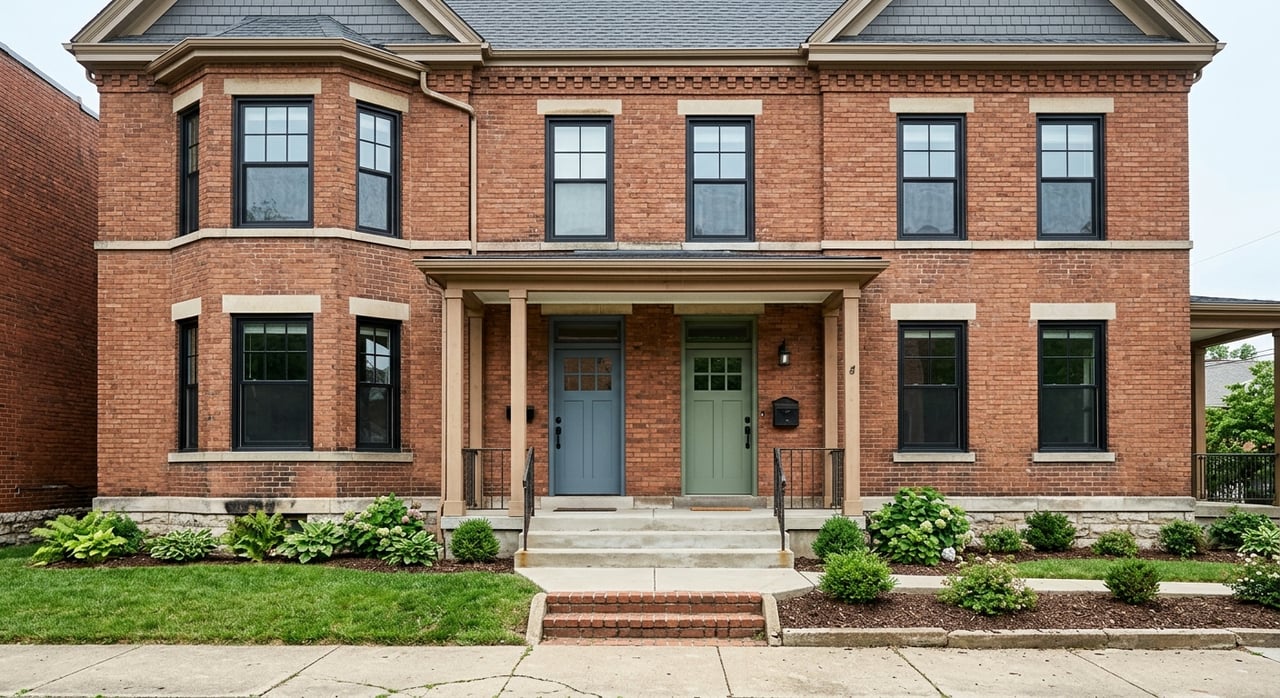
One of the biggest factors in Covington is the age of the housing stock. The city reports that roughly 70% of housing units are 50 years or older, and nearly half were built before 1940, according to this Covington housing update. That creates opportunity for value-add investors, but it also raises the risk of major capital expenses.
Older properties can need more than cosmetic work. Roofs, plumbing, electrical systems, windows, foundations, and drainage can all affect your budget and timeline. If you are evaluating a low-price property without estimating these costs carefully, your projected returns can fall apart quickly.
If a property was built before 1978, lead-paint risk should be part of your due diligence. Covington’s lead hazard program information highlights why older-paint screening matters, especially if you plan a rehab.
When you review a potential deal, prioritize these items:
In Covington, a property that looks affordable on paper may require much larger reserves than a newer building in a suburban market.
A profitable rental can still become a problem if the property does not fit local rules. In Covington, landlords must obtain an occupational license, a rental license, and zoning permits where required, according to the city’s Finance Department rental licensing information. Long-term rental licenses are renewed every three years and require an inspection when granted.
That means your timeline should include licensing and inspection steps, not just closing and repairs. You should confirm current use, zoning status, and any permit needs before you finalize your underwriting.
Covington’s Code Enforcement Division enforces property maintenance, nuisance, and zoning codes. Rental inspections focus on unsafe or unsanitary conditions rather than cosmetic details, which is helpful, but it still means you need to evaluate habitability and maintenance standards seriously.
For investors, this matters in two ways. First, deferred maintenance can create compliance costs after closing. Second, poor management assumptions can hurt cash flow if repairs and inspections were not built into the plan from the start.
Some rehab projects in Covington need extra review because of historic status. The city states that standard roof replacement no longer requires a zoning permit, but properties in Historic Preservation Overlay districts still need a Certificate of Appropriateness. If you are buying an older building in a historic area, make sure your rehab timeline reflects that process.
The best investment analysis is usually the boring one. In Covington, that means using realistic rent assumptions, budgeting for older-building repairs, and avoiding overly aggressive appreciation projections.
The city’s housing taskforce has emphasized the need for workforce housing, more 1- and 2-bedroom options, and preservation of historic housing stock, as noted in this taskforce announcement. For many buyers, that supports a long-term rental or value-add hold strategy more than a plan built on rapid price growth alone.
Your monthly and annual ownership costs should include more than taxes and insurance. Covington’s current real estate tax rate is 0.277 per $100 of assessed value, with assessed values set by the Kenton County PVA, according to the city’s Finance Department. The city also lists a $152.52 annual trash fee for individual homes and a $4.54 monthly storm water and flood management fee for a single-family property.
For duplexes and larger multifamily properties, these costs can scale differently. Duplexes pay per unit, while larger multifamily buildings may be charged based on roof area and impervious pavement. That is why your expense model should match the actual property type instead of relying on a rough percentage.
If you are considering a short-term rental exit, underwrite it carefully. Covington’s current rules require licensing and zoning review, and the city also has a cap on non-host-occupied licenses plus historic-district density limits, according to the city’s rental license guidance.
That does not mean short-term rentals are impossible. It does mean you should not base your acquisition on best-case Airbnb income without confirming the rules that apply to that specific property. In many cases, a long-term rental strategy may be the more stable assumption.
If you want a practical way to compare properties, use a four-part framework:
Location and access
Review commute routes, traffic exposure, walkability, and flood risk.
Building age and rehab scope
Estimate repairs, system updates, lead-related concerns, and capital reserves.
Local compliance
Confirm licensing, inspections, zoning, and any historic-district review.
Conservative cash flow
Use realistic rents, accurate local fees, and a stable exit strategy.
This approach fits Covington especially well because the market combines older housing, meaningful rental demand, and rules that can affect both timeline and returns.
You do not have to evaluate everything alone. In a market like Covington, local insight can make a real difference, especially when you are comparing blocks, estimating rehab scope, or deciding whether a property works better as a long-term hold, a multifamily investment, or part of a 1031 exchange strategy.
Working with an experienced local real estate advisor can help you narrow your search, identify red flags earlier, and compare opportunities with more context. If you want help evaluating investment properties in Covington or across Northern Kentucky, connect with Deborah Long for tailored guidance and a concierge-level approach built around your goals.
Stay up to date on the latest real estate trends.





Let Debbie Long guide you through one of life’s biggest decisions with clarity and confidence. From initial consultation to closing day, Debbie’s tailored approach ensures your real estate experience is as smooth and rewarding as possible.